

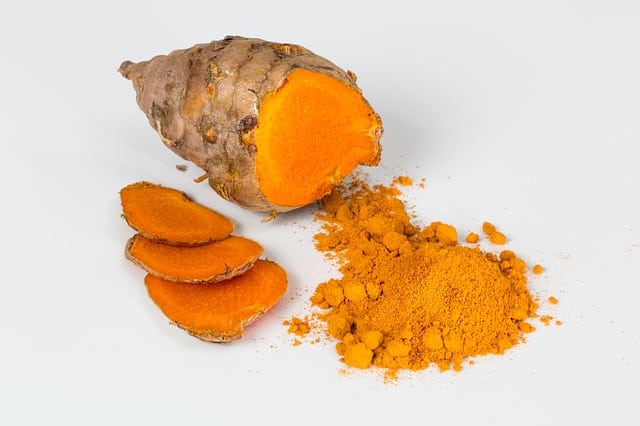
Turmeric(Curcuma longa) is a perennial plant of the genus "Curcuma" with branched brown roots, and the inside is orange in color and has a specific smell. The roots are used more as a medicine than as a culinary spice.
Turmeric contains the active substance curcumin, thanks to which the drug is a "miracle" of nature and is characterized by advantages that are complemented by the rich content of vitamins of group B, vitamin C, K, zinc, calcium and others.
Turmeric stands out above all for its antioxidant action combined with its antibacterial activity. As an additional characteristic of turmeric, its hepatoprotective and anti-ulcer effects are highlighted. At the same time, turmeric exerts anti-inflammatory activity by lowering the levels of histamine and prostaglandins, which provoke inflammatory processes in the body. Curcumin has an anticoagulant effect and is a reliable remedy against ischemic stroke and myocardial infarction.
Turmeric stands out above all for its antioxidant effect
Ulcer: Turmeric has a beneficial effect on the healing process by helping to reduce gastric secretion, accelerating the regeneration of the gastric mucosa.
Улцерозен колит/вкл.болестта на Крон/: Turmeric supports the body's defenses, which largely depend on the condition of the small and especially the large intestines, where the main part of the immune system is believed to be located. The healing effect is believed to be due to curcumin's ability to suppress the inflammatory factor NF-κB.
Diabetes от II тип: Curcumin lowers the blood sugar levelmainly by normalizing its levels and is able in a number of cases to completely replace antidiabetic drugs, especially in combination with goji berries and cinnamon.
Chronic pancreatitis: Turmeric suppresses the inflammatory process in the pancreas by affecting its enzymes, thus leading to remissions.
Ревматоиден артрит: The effect on rheumatoid arthritis is due to the presence of zinc in turmeric and curcumin itself. The effect is similar for chronic uveitis, especially if curcumin is combined with corticosteroids.
Cardiovascular system: Turmeric has a beneficial effect on the atheromatous process, such as lowers bad cholesteroland at the same time increases the level of good, lowers platelet values. Thanks to the rich content of vit. B6 in turmeric, the level of homocysteine, which is an immediate damager of the vascular wall, is sharply reduced. In just about a week of using turmeric, it is able to reduce bad cholesterol by about 11% and raise good cholesterol by 30%.
Antitumor action: В условия на експеримент върху животни е установено, че при crab на дебелото черво, млечните жлези, панкреаса, простатата и левкемия у деца, куркумата потиска растежа и развитието на злокачествени клетки. При пациенти с вродена форма на полипоза на дебелото черво, лекувани с куркума и кверцетин в продължение на 6 месеца, полипите са изчезнали в 60% от пациентите, а при останалите – полипите са намалили дължината си с 50%. Куркуминът в комбинация с броколи спира развитието на рака на простатата и на гърдата в продължение на 8-12 месеца.
Curcumin has shown a curative effect in cystic fibrosis– a very serious genetic disease. Significant improvements were also observed in patients with psoriasis, treated with turmeric.
Alzheimer's disease: Колкото и невероятно да звучи, проучванията показват, че куркуминът предпазва мозъка срещу производството на протеин при болестта на Алцхаймер чрез включване на един ген, който кодира производството на антиоксидантни протеини, предпазващи мозъка срещу оксидативната вреда от свободните радикали. Това окисление се смята за ключов фактор за стареенето и отговаря за neurodegenerative diseases, incl. dementia such as Alzheimer's disease.
In conclusion: The use of turmeric is of particular benefit not only to sick people, but also to healthy persons, except for pregnant and lactating women. No side effects have been identified even with long-term use in optimal doses of 1/2 to 1 capsule of curcumin powder daily.
Author:Prof. Dr. Petar Manolov, Ph.D
Source: lekuva.net



 English
 Български
 Deutsch
 Русский
 Español